


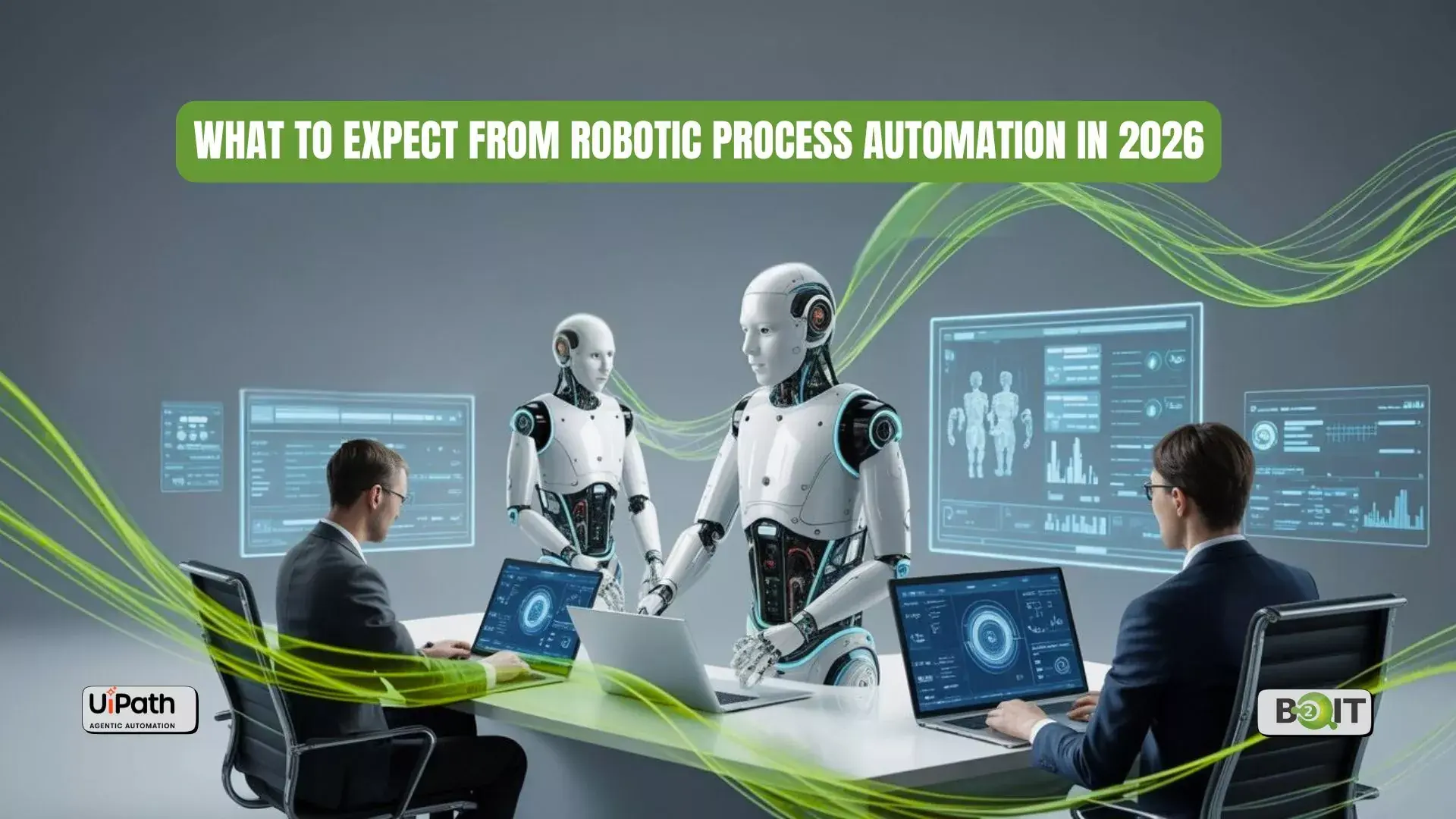
It wasn’t long ago that automation was viewed simply as a way to perform repetitive, rigid tasks; essentially, digital assembly lines. Today, Robotic Process Automation (RPA) has matured into a strategic powerhouse driving digital transformation worldwide.
Leading platforms like UiPath have shifted from basic task execution to complex, AI-driven decision-making, proving that RPA is no longer just about saving time; it is about rewriting how businesses operate. As we look toward 2026, the technology is set to become even more intuitive, integrated, and indispensable.
Whether you are already using software robots or just beginning your journey, understanding the future landscape is vital.
Here is what you can expect from the world of RPA in 2026.
6 Key RPA Trends to Watch in 2026
The convergence of Artificial Intelligence (AI) and automation is the defining theme for the coming years. Based on current market trajectories and insights from industry leaders, here are six major trends that will shape the sector:
1. The Rise of Agentic AI
We are moving beyond standard automation into the era of “Agentic Automation.” While traditional bots follow strict rules, AI agents can perceive, reason, and act independently to achieve complex goals. By 2026, expect to see bots that do not just follow a script but actively solve problems and handle exceptions without human intervention.
2. Hyperutomation through Process Mining
Guesswork will be removed from the equation. Tools that combine process mining with RPA will become standard. Before a single bot is built, AI will analyse your company’s workflows to identify exactly where bottlenecks exist and which processes yield the highest Return on Investment (ROI) if automated.
3. Strict Governance and AI Ethics
As bots become smarter, the need for control increases. 2026 will see a heavy focus on governance frameworks. Organisations will need to ensure their digital workforce operates securely, ethically, and in compliance with global regulations. Expect “human-in-the-loop” protocols to remain essential for high-stakes decision-making.
4. Democratisation via Low-Code Platforms
You will no longer need a degree in computer science to build a bot. Platforms like Microsoft Power Automate are championing the “citizen developer” movement. With intuitive drag-and-drop interfaces and Copilot assistants, employees across all departments will be empowered to automate their own daily tasks.
5. Shift to Cloud-Native and Unattended Automation
On-premise infrastructure is becoming a thing of the past. The future is cloud-native, allowing for scalable “unattended” automation. Think bots that work 24/7 in the background without needing a user to be logged in. This shift reduces infrastructure costs and improves reliability.
6. Flexible Consumption Models (RaaS)
The capital expenditure of setting up automation infrastructure can be a barrier. “Robots as a Service” (RaaS) will become a preferred model for many SMEs. This allows businesses to hire digital workers on a subscription basis, scaling up or down as workload demands change.
B2IT | RPA Software to Suit Your Needs
At B2IT, we understand that every business has unique requirements.
We partner with the world’s leading automation providers to ensure you stay ahead of the curve:
- UiPath: As a certified partner, we deploy UiPath’s enterprise-grade platform to help you automate complex, end-to-end business processes with market-leading AI integration.
- Microsoft Power Automate: For organisations deeply embedded in the Microsoft ecosystem, we help you leverage Power Automate to streamline workflows across your favourite apps with low-code simplicity.
- Robots as a Service (RaaS): Not ready to purchase a full infrastructure? Our RaaS model lets you deploy attended or unattended bots with a flexible pricing structure that scales with you.
Whether you need to automate invoice processing, HR onboarding, or customer service queries, we have the tools to make it happen.
Ready to future-proof your business? Contact us today to discuss your automation strategy.
0 Comments